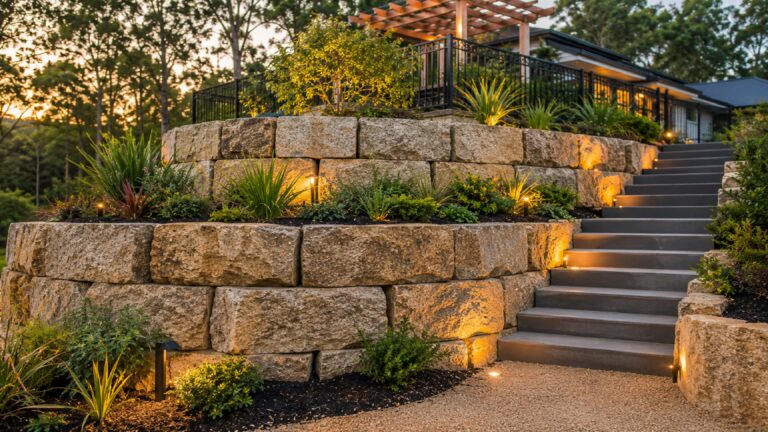

Owning a home on a steep or split-level block in South Australia can feel like a bit of a mixed blessing. While you might score spectacular views across the Adelaide Hills, trying to figure out what to do with a steep incline is often a massive headache. A hilly block doesn’t have to mean wasted, unusable dirt; with the right sloping backyard landscaping ideas Adelaide Hills, you can transform a challenging grade into a beautifully terraced, highly functional outdoor space that actually increases your property’s value.
When dealing with structural landscaping on an incline, you can’t just think about what plants look pretty. You have to look at the physics of the land. Let’s break down exactly how to tame a sloping yard, prevent shifting soil, and create distinct zones for outdoor living.
1. The Power of Terracing and Retaining Walls
Instead of battling a single, aggressive hill, the most effective approach is to break the slope down into manageable steps. Terracing turns a steep, unusable drop-off into a series of flat, functional platforms.
By building a series of tiered retaining walls, you can designate specific purposes for each level. For example, your top tier could hold a flat, lush lawn for the kids, the middle tier could feature a paved fire pit zone or an outdoor dining area, and the bottom tier can be reserved for low-maintenance garden beds.
When it comes to materials, longevity matters. In South Australia’s climate, heavy-duty concrete sleepers offer exceptional strength and resist rot, making them ideal for structural boundaries. For a softer, more rustic look that blends into natural surroundings, hand-selected moss rocks or rugged stone blocks provide great stability while adding incredible texture to the landscape.
2. Why Professional Earthmoving and Site Prep are Non-Negotiable
It is a common mistake to think you can simply stack blocks against an active hillside and call it a day. The sheer weight of wet earth exerts massive pressure against anything in its path. Without the right foundations, a retaining wall will eventually lean, bow, or fail completely.
Before any structural elements go up, proper earthmoving and excavation must take place. This involves cutting into the slope cleanly, leveling out the specific tiers, and thoroughly compacting the sub-base. Removing hidden obstacles like old tree stumps or deep rocks during this initial stage ensures that the soil underneath stays stable for decades, preventing costly ground shifts down the road.
3. Solving the Slope Drainage Puzzle
Water always finds the path of least resistance, and on a steep property, that path is straight down. During heavy winter downpours, uncontrolled stormwater will strip away your topsoil, wash away expensive mulch, and turn the bottom of your yard into a swampy mud pit—or worse, pool right against your house foundations.
Effective yard drainage must be integrated directly into your landscape plan. This means installing perforated agricultural pipes (AG pipe) surrounded by clean aggregate behind every single retaining wall to relieve hydrostatic pressure. Creating subtle, gravel-lined swales or spoon drains on upper levels can also catch runoff early and safely redirect it toward the street or stormwater system before it causes soil erosion.
4. Choosing Deep-Rooted Plants to Anchor the Soil
Once the heavy structural work is complete, soft landscaping acts as the final anchor. You want to avoid plants that require intensive maintenance because trying to push a lawnmower up a 30-degree incline every Saturday is both exhausting and dangerous.
Instead, look for hardy, low-maintenance varieties with aggressive root systems that naturally tie the soil together. For local conditions, native Australian grasses and shrubs work beautifully. Varieties like Lomandra longifolia (such as Tanika), Westringia (Native Rosemary), and spreading grevilleas thrive in hot summers, tolerate winter dampness, and create a dense carpet of green that keeps weeds at bay while preventing surface washouts.
How do you landscape a sloping backyard on a budget?
The most budget-friendly way to landscape a slope is to use a combination of minor earthworks and heavy planting rather than building massive structural walls. Creating wide, natural dirt batters (slopes) stabilized with weed matting, thick mulch, and deep-rooting groundcovers minimizes material costs. If steps are needed, opting for treated timber sleepers or compacted gravel paths instead of large concrete retaining walls will significantly reduce overall expenses.
Ready to Maximise Your Sloping Backyard Landscaping?
If you’re ready to stop fighting your uneven block and start maximizing your backyard area, reaching out to local structural landscaping experts is the best first step. The team at John Walters Landscaping is always here to help you map out the perfect plan for earthworks, retaining walls, and drainage solutions tailored specifically to your property.