
Over the years at John Walters Landscaping, we’ve watched suburban block sizes shrink while the desire for functional outdoor living has only grown. You don’t need an expansive rural property to create a beautiful, relaxing outdoor area; you just need to alter your approach to scale and structure. When our team tackles tight blocks, we rely on strategic small backyard landscaping ideas in Blackwood that prioritize spatial flow, clever material choices, and vertical elements. By treating a compact yard as an intentional extension of your indoor living room, you can maximize every single square meter without making the area feel crowded or cluttered.
Design with Multi-Functional Zones
One of the most common mistakes we see in smaller yards is trying to copy designs meant for large acreages. When space is limited, every element needs to earn its keep. Instead of scattering freestanding furniture and isolated pots around the yard—which quickly breaks up the visual space—we always recommend built-in solutions.
For instance, constructing a low timber bench right against a boundary wall or fence provides plenty of seating for weekend BBQs while keeping the central floor area completely open. Designing your layout around how you actually walk out your back door ensures the space feels natural, open, and easy to navigate.
Choose Large-Format Paving Options
The size of your pavers has a massive psychological impact on how big your yard feels. There is a common misconception that small spaces require small materials. In reality, laying small cobblestones or bricks creates a dense grid of grout lines that can make a courtyard look busy and restricted.
We generally advise homeowners to opt for large-format paving options, such as 600x600mm or even larger rectangular stone pieces. Fewer joint lines mean less visual noise, which instantly tricks the eye into seeing a broader, more continuous surface. Keeping the paving level flush with your indoor flooring or decking further blurs the line between inside and out, making both areas feel significantly larger.
Think Vertically to Save Ground Space
When you run out of horizontal ground to plant on, the only way to go is up. Dedicating wide sections of a pocket-sized yard to traditional garden beds drastically reduces your usable lifestyle space.
Instead, we prefer utilizing boundary walls and sturdy fencing to bring in greenery. Installing slim timber batten screens or minimalist wire trellises allows you to grow climbing plants like star jasmine or native hardenbergia. This gives you that lush, organic feel and softens hard boundaries without stealing valuable floor space from your dining table or lawn.
Prioritize Subsurface Drainage Solutions
While choosing plants and stone finishes is the fun part of landscape construction, what goes on beneath the surface determines how well the yard ages. Small backyards—especially those boxed in by neighboring homes, retaining walls, or colorbond fences—are incredibly prone to water pooling during heavy downpours.
Without proper levels and robust drainage solutions, a beautiful courtyard can quickly turn into a muddy swamp or, worse, direct water back toward your home’s foundations. Incorporating discrete strip drains along paved edges or installing subsurface agi-pipes ensures that stormwater is managed efficiently before it ever has a chance to ruin your garden or outdoor flooring.
Create Depth with Low Retaining Walls
A perfectly flat, single-level yard can sometimes feel a bit two-dimensional and boxing. Introducing subtle variations in height is an excellent design trick to add depth and architectural interest to a small space.
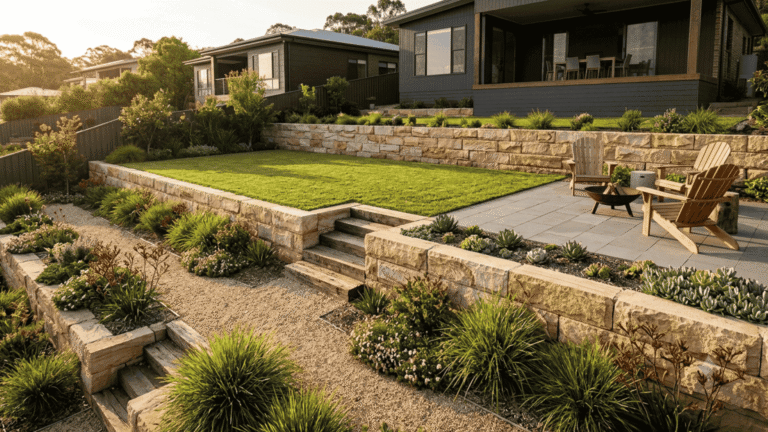
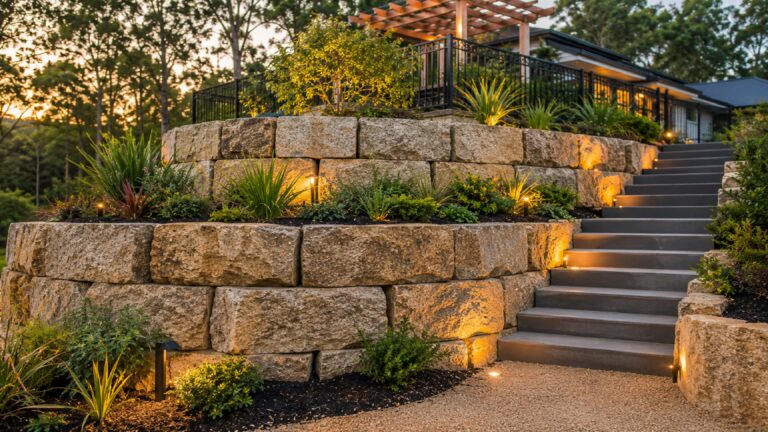
Using low masonry or timber retaining walls to create raised garden beds does two things beautifully. First, it lifts the plants up, drawing the eye upward and creating a sense of volume. Second, if your property sits on tough, uncooperative soil or rock, raised beds give you total control over the topsoil quality, ensuring your plants actually thrive without requiring extensive, deep excavation across the entire yard.